
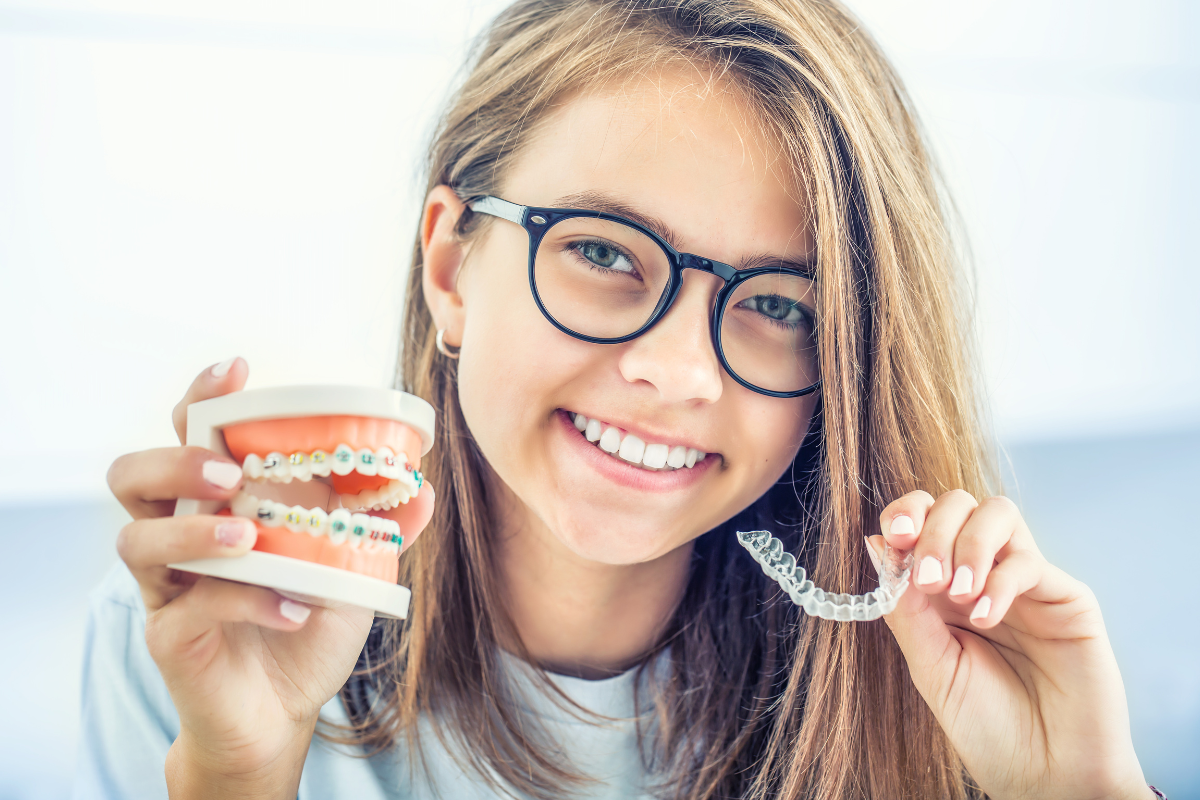
When it comes to achieving a confident, straight smile, choosing the right orthodontic treatment can be a daunting decision. For many patients, the key question is: Invisalign vs. braces – which is more effective, more comfortable, and better suited to your lifestyle?
At One Eleven Dental, we understand that every smile is unique, and so are your orthodontic needs. This comprehensive guide explores the pros and cons of Invisalign aligners vs braces, offering a detailed look at each treatment to help decide “what’s better, braces or invisalign”. Whether you’re a teenager exploring options with your parents or an adult looking to enhance your smile discreetly, this article will give you the clarity you need.
Invisalign vs. Braces: Understanding the Treatments
Invisalign Treatment
Invisalign is a modern orthodontic solution that uses a series of clear, custom-made aligners to shift your teeth gradually. These Invisalign aligners for teeth are nearly invisible, offering a discreet alternative to traditional braces.
Mechanism: The Invisalign dental braces system works by changing your aligners approximately every one to two weeks. Each set of Invisalign aligners is designed to move your teeth incrementally until you achieve your ideal smile.
Ideal For: Mild to moderate alignment concerns, including minor crowding, gaps, and even some cases of overbite.
Traditional Braces
Traditional braces vs. Invisalign dental braces involve comparing Invisalign with fixed appliances made of metal braces or ceramic braces. Dental braces consist of brackets bonded to the teeth and connected by wires.
Mechanism: Braces apply continuous, controlled pressure to reposition teeth over time gradually. Adjustments are made periodically by your orthodontist.
Ideal For: Complex alignment problems, including severe crowding, significant bite issues, and major tooth rotation.
Invisalign vs. Braces: A Comparative Analysis
| Category | Invisalign | Braces |
| Aesthetics | Nearly invisible; great for those who want subtle treatment. Invisalign on teeth blends in seamlessly. | Noticeable, especially metal teeth braces, although ceramic options are less visible. |
| Comfort | Made from smooth plastic, reducing irritation to cheeks and gums. | May cause discomfort due to the presence of wires and brackets. Teeth brace adjustments can lead to soreness. |
| Treatment Duration | Typically 12–18 months for suitable cases. Duration may vary with Invisalign dental compliance. | Usually 18–24 months; suitable for complex dental corrections. |
| Effectiveness | Effective for mild to moderate issues. Answers to questions like “Is Invisalign more effective than braces?” depend on case complexity. | Superior for complex malocclusions. The success rate of Invisalign vs braces varies from patient to patient. |
| Oral Hygiene | Aligners are removable, making brushing and flossing easier. | Requires diligent cleaning around brackets and wires. |
| Lifestyle Impact | No dietary restrictions; aligners are removed when eating or drinking anything but water. | Foods like popcorn, sticky candy, and hard nuts must be avoided. |
Pros and Cons of Invisalign vs. Braces
| Treatment | Pros | Cons |
| Invisalign | Virtually invisible appearance- Removable for meals and cleaning – Comfortable to wear | Must be worn 20–22 hours a day- Not suitable for all cases – Risk of losing aligners |
| Braces | Ideal for complex corrections- No need to remember to wear them – Durable | Highly visible (braces vs Invisalign aesthetics) – Can cause mouth irritation- Dietary limits |
Key Considerations of Invisalign vs. Braces
Invisalign vs Braces for Teenagers
Teenagers often prefer Invisalign aligners for their teeth due to their discreet appearance and flexibility. These clear aligners are nearly invisible, making them ideal for teens who are concerned about their appearance during school, sports, and social events. Invisalign orthodontic treatment trays are also removable, allowing for easier oral hygiene and unrestricted food choices.
However, treatment success with Invisalign depends on wearing the aligners for 20–22 hours a day, which can be challenging for some teenagers. In cases where discipline or compliance is uncertain, metal braces offer a more reliable solution. As fixed appliances, dental braces continuously apply pressure without relying on the patient to stay on track, making them more effective for complex or severe alignment issues.
Invisalign vs Braces for Adults
Adults often prefer Invisalign aligners for their virtually invisible design and convenience. Invisalign orthodontic treatment offers a seamless fit into professional settings and social life, offering discreet correction for mild to moderate misalignment. The removable nature of Invisalign dental makes daily oral care easier and avoids the food restrictions associated with traditional metal braces.
However, adult orthodontic cases may involve more complex dental conditions, such as previous restorations or gum concerns, which may require the precision and force of metal teeth braces. When evaluating the pros and cons of braces vs. Invisalign for adults, it often comes down to case complexity, lifestyle needs, and the importance of consistent aligner use.
Invisalign vs Braces for Overbite Correction
Both Invisalign treatment and traditional braces can correct overbites, depending on the severity of the issue. Invisalign aligners have evolved to manage mild to moderate overbites by utilizing customized trays and precision attachments that guide tooth and jaw movement effectively over time.
For deep or complex overbites – especially those involving skeletal alignment—metal braces are often more suitable. Comparing invisalign vs braces overbite, braces allow orthodontists to use auxiliary tools like elastics or springs to achieve significant bite correction. Choosing between Invisalign vs. braces for overbite depends on the diagnosis, treatment goals, and structural needs of the patient’s jaw and teeth.
Invisalign vs. Braces: Which is Better?
When evaluating which is better, braces or Invisalign, the answer truly depends on your orthodontic needs, lifestyle, and personal preferences. Both treatments—Invisalign or braces—have unique benefits. From invisalign braces vs braces comfort to “is Invisalign better than braces in terms of convenience”, every factor matters.
At One Eleven Dental, our experienced team will carefully evaluate your smile and discuss your goals to help you determine the best solution, whether that’s Invisalign treatment or dental braces.
To take the next step toward your perfect smile, we invite you to schedule a personalized consultation. Call us today and let our experts guide you through this important decision.
FAQs
Q. Which is Better, Braces or Invisalign?
A: Traditional braces are typically more effective for complex alignment issues, while Invisalign is ideal for mild to moderate cases and offers a discreet, removable alternative.
Q. What are the Disadvantages of Invisalign?
A: While Invisalign is a popular and discreet option for straightening teeth, it does come with some limitations. These include higher costs than traditional braces, possible speech changes, initial discomfort, and the need for strict wear-time and hygiene. Improper use can also increase the risk of cavities and gum issues.
Q. Why Choose Invisalign Over Traditional Braces?
A: Traditional braces can cause gum irritation due to their brackets and wires. In contrast, Invisalign aligners fit smoothly over your teeth for a more discreet and comfortable feel. While they’re nearly invisible, some users may experience a slight lisp during the initial adjustment period.
Q. Do You Get Better Results with Braces or Invisalign?
A: Traditional braces are more effective for severe orthodontic cases, while clear aligners often offer faster treatment times, typically ranging from 6 to 12 months.
Q. How Long Does it Take For Gaps to close with Braces?
A: Small gaps can close in as little as 6–9 months with braces, while larger spaces may take up to 18 months or more, depending on your case.